
Zvenyhorod, a forgotten capital

The chronicled Zvenyhorod is one of the first princely capitals of the Ukrainian Carpathian region. This ancient city, older than Lviv and Halych, left behind relics of exceptional value that are still preserved underground.
Ancient and early modern history of this area is also interesting and multifaceted. A set of archaeological materials and written sources show that the territory of Zvenyhorod and the surrounding area were intensively and continuously inhabited in prehistoric times. The 17th century left behind earthen bastions, which today are a visual hallmark of the ancient city.
However, it was the princely period that left the largest number of artifacts, and the events that took place on this territory were exceptionally important not only for Zvenyhorod, but also for all Western Ukrainian lands.
5 facts about the chronicled Zvenyhorod
- The city is almost 200 years older than Lviv; the first chronicle mention dates back to 1086.
- Three of the oldest documents in the state archival fund of Ukraine - birch bark charters - originate from Zvenyhorod. One of them was perfectly preserved and gives us a sample of writing and language of the 12th century.
- In the 12th century, the first white-stone palace and church in what is now Western Ukraine were built in Zvenyhorod.
- In Zvenyhorod, archaeologists found a fragment of a unique musical instrument from the first third of the 12th century. - seven-stringed gusli. This is the only find of this kind on the territory of Ukraine.
- The ancient princely capital has been explored by no more than 10% to date.


Zvenyhorod’s foundation and prosperity
The name of the city, Zvenyhorod, was first documented in chronicles in 1086. Its foundation is associated with the great-grandson of Kyivan Prince Yaroslav the Wise, Volodar. Construction of the city in the Bilka River valley began in the second half of the 11th century. During the time of its founder, Volodar, the city gradually grew and became economically stronger: The wooden walls of the castle fortifications and the first church were built here; a dam was built across the swamps, and a bridge was laid over it, connecting the city with trade routes. Zvenyhorod flourished during the reign of Volodymyrko Volodarevych (1124-1141). Having inherited Zvenyhorod, he turned the city into a rich capital, whose area within the fortified areas amounted to 139.5 hectares. During Volodymyrko's reign, unprecedented construction work took place in the city. In particular, a new princely court was built in the form of a white-stone ensemble, which was in line with European trends of the time. The complex consisted of a palace connected to the church by a wooden two-story gallery-passage, and a tomb.

Life and crafts in ancient Zvenyhorod
Collections of artifacts found on the territory of the city and those identified as the products of local workshops show a high level of handicraft production, primarily jewelry, bone-cutting, glassmaking, shoemaking, woodworking, blacksmithing, pottery, etc. Trade and imports of various goods were active. In the neighborhood of rich boyar courtyards, foundries, glass and jewelry workshops, smithies, and warehouses flourished within each estate. All residential buildings had wooden floors, and the sidewalks within the courtyards, passages, alleys, and streets between the estates were also covered with wooden flooring; the main thoroughfare of the city had two-way traffic. The rooms of the houses were illuminated using wicker lamps, clay lamps, glass lamps, and candlesticks. A wide range of tableware and kitchen utensils now tells us about the developed culture of cooking and eating, where we can distinguish between pots, plates, bowls made of wood and clay (often glazed), bone and wooden spoons, glass cups, wooden ladles, etc. Fine arts (painting, stone and wood carving), music (playing the gusli and flutes), and writing flourished in Zvenyhorod. Various games that developed both physical and intellectual abilities of children and adults were popular.
The last defense of Zvenyhorod
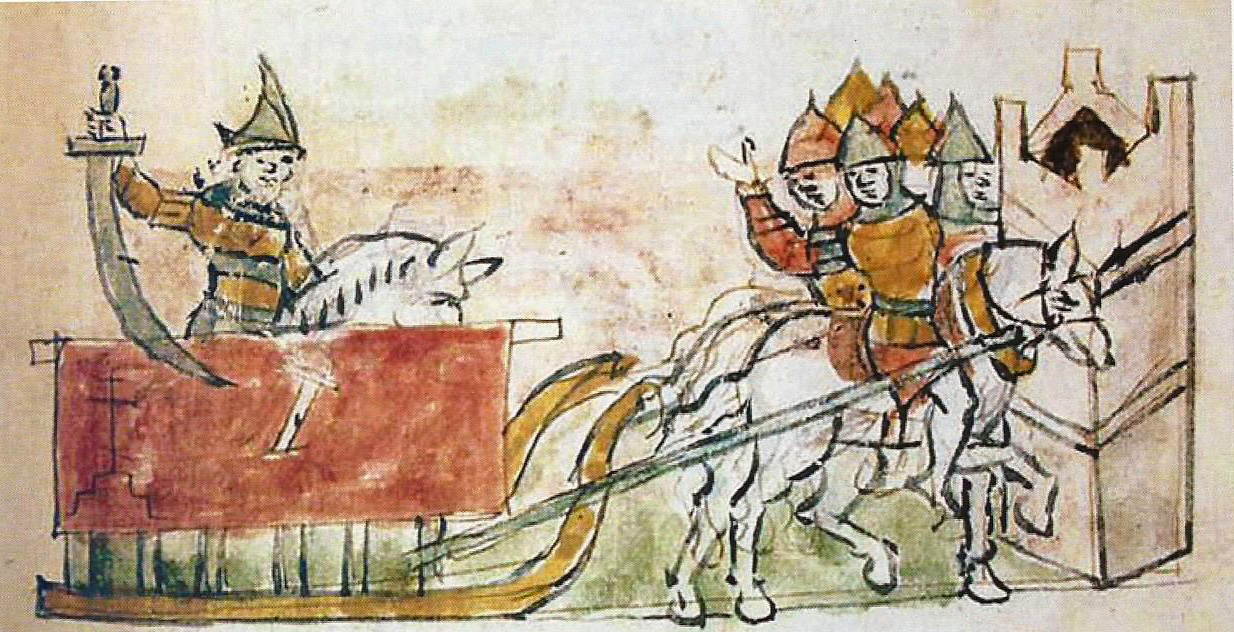
The oldest chronicles mention Zvenyhorod 15 times. All the references are connected with inter-princely political conflicts, which mostly ended in battles under its walls, and each time the city managed to resist. The history of princely Zvenyhorod ends in the winter of 1241: After the destruction of Kyiv, an army of Mongol-Tatars led by Batu Khan came to the town. According to legend, the enemy was led into the city by an old woman who lived in the swamps and knew the secret passages. The Mongols burned all the buildings to the ground. Zvenyhorod has not regained its status as a powerful city since then. At the same time, a new city, Lviv, was founded 25 km from Zvenyhorod, entering the political arena.
Zvenyhorod Castle of the 18th century. – The new history of Zvenyhorod
A new stage in the development of Zvenyhorod began in the 14th century, when late medieval residential, commercial, and industrial buildings were constructed. In the late 16th century it became the property of the Seniavsky family. The name of the crown hetman of the Polish-Lithuanian Commonwealth, Adam Seniavskyi, is associated with the appearance of the Zvenyhorod Castle on the territory of the former citadel of the princely capital in the early 18th century, which, however, was never completed. What remains of its fortifications today are four pentagonal corner earthen bastions and the remains of the earthen fortification system. Thus, Zvenyhorod became an object of interest for local etnographers and historians more than a century ago. Yaroslav Pasternak began archaeological research of the chronicled city in the 1930s, and its systematic consistent study began in the postwar period and continued until the 1990s.